Happy Love Day: A Designer’s Review for Small Business Merch
As an embroidery designer who has spent years digitizing files and consulting with small business owners, I approach every new machine embroidery design with a critical eye. It is not enough for a design to look pretty on a screen; it must perform under the needle, withstand washing, and elevate the brand it represents. Today, I am reviewing Happy Love Day, a digital asset positioned within the Valentine S Day category, to determine its viability for commercial use.
The product description promises that this lovely embroidery will look great on any fabric or clothes it will be stitched on. While this is a bold claim, my job is to test that promise against the realities of production. For boutique owners, Etsy sellers, and local businesses looking to create branded merchandise, understanding the nuance between a decorative file and a professional-grade embroidery file is crucial. Here is my assessment of how Happy Love Day fits into a serious business strategy.
First Impressions and Visual Personality
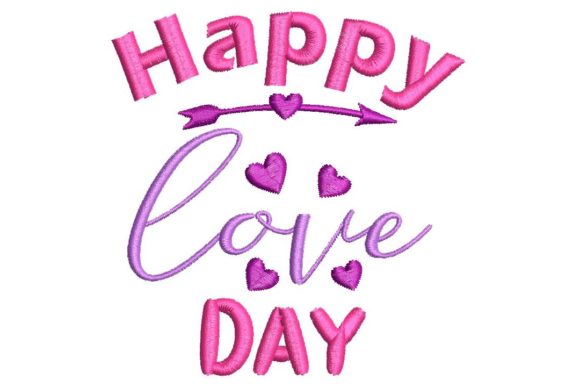
Upon initial inspection, Happy Love Day carries a distinct visual personality. The title suggests warmth, affection, and celebration, which translates into a design that feels friendly and inviting rather than rigid or corporate. For brands in the lifestyle, bakery, florist, or handmade gift sectors, this aesthetic is invaluable. It does not scream "luxury minimalism," but it also avoids looking amateurish. Instead, it strikes a balance that feels approachable and heartfelt.
This visual tone is essential for customer engagement. When a client sees an embroidered item, they are subconsciously judging the quality of the business behind it. A design that feels too generic can lower perceived value, while one that is overly complex can look messy if not executed perfectly. Happy Love Day appears to lean towards a classic, decorative style that works well for seasonal promotions or year-round branding for businesses centered on care and community.
Real-World Applications for Small Business Merch
The true test of any design is its versatility across different substrates. Based on the description stating it looks great on any fabric, I evaluated several common use cases for small business merch.
- Embroidered Patches: This is perhaps the strongest application. An embroidered patch allows for high visibility and durability. If the design scales well, it can serve as a standalone badge for tote bags or jackets, creating a collectible item for customers.
- Apron Embroidery: For cafes, bakeries, and craft studios, staff uniforms are walking billboards. Placing Happy Love Day on the chest pocket or upper back of an apron adds a personal touch that customers appreciate. It signals that the staff cares about their craft.
- Tote Bag Design: Reusable bags are a staple for retail shops. A well-placed design on a canvas tote transforms a simple utility item into a fashion accessory. The key here is ensuring the stitch density does not cause the fabric to pucker.
- Cap Embroidery: Hats require precise digitizing due to the curved surface. If Happy Love Day has clean lines and appropriate spacing, it can work beautifully on the front panel of a dad hat or trucker cap, offering subtle brand recognition.
For handmade product sellers, using this design on product packaging accents or as a label on clothing tags can enhance the unboxing experience. It turns a standard transaction into a memorable interaction, reinforcing brand identity through tactile quality.
Critical Considerations for Production
While the potential is high, there are areas where caution is necessary. The statement that it works on "any fabric" is a marketing generalization that requires technical scrutiny. As a designer, I advise checking specific details before committing to a large production run.
Stitch Density and Fabric Texture: If the design has high stitch density, it may pull on lightweight fabrics like silk or thin cotton. On textured fabric such as terry cloth or heavy denim, fine details might get lost. Always test on the actual material you intend to use. For dark uniforms, ensure the thread colors provide sufficient contrast. A pastel design on a black polo shirt will vanish unless you use an underlay or choose vibrant thread colors.
Size Limitations: Tiny lettering or intricate outlines can become a nightmare during production. If Happy Love Day includes small text, verify that it remains legible at smaller sizes, such as on a sleeve detail or a small patch. Blurred letters look unprofessional and can damage customer trust.
Hoop Size and Stabilizer: Confirm the required hoop size matches your machine’s capabilities. More importantly, select the right stabilizer. Cut-away stabilizer is often best for garments that will be washed frequently, while tear-away might suffice for decorative items that see less wear. Using the wrong stabilizer can lead to distortion, ruining the finished product.
Enhancing Brand Identity and Value
Incorporating Happy Love Day into your product line is not just about adding decoration; it is about strategic branding. Consistent use of high-quality embroidery signals professionalism. When customers see neat, secure stitching, they associate that quality with your entire business. This builds recognition and trust.
For Etsy sellers and crafters, offering custom apparel with this design can differentiate your shop from competitors who rely solely on print-on-demand services. Embroidery has a premium feel that prints often lack. It adds tangible value, allowing you to price your items higher while justifying the cost through superior craftsmanship.
Practical Designer Notes for Implementation
Before you launch your next campaign, follow these steps to ensure success with this digital embroidery file:
- Test in Black and White: Convert the design to grayscale in your software to check for contrast issues. If the design relies solely on color to define shapes, it may fail on monochrome garments.
- Create a Printable Mockup: Use design assets to create a realistic preview for client approval. This helps manage expectations and reduces revision requests.
- Check Commercial Licensing: The description mentions creating beautiful gifts, but always confirm the license terms. Ensure you have the right to use the file for commercial embroidery and mass production if needed.
- Inspect Spacing: Look for areas where stitches are too close together, which can cause thread breaks, or too far apart, which exposes the fabric underneath.
- Compare Beside Other Assets: Place Happy Love Day next to your existing logo or brand elements. Does it complement your visual consistency, or does it clash? Harmony in design assets strengthens brand recall.
Since the provided description does not specify exact stitch count, file format, or detailed technical specs, I strongly advise downloading a sample or contacting the seller for these details. Knowing whether the file is in PES, DST, or JEF format ensures compatibility with your machine. Understanding the stitch count helps estimate production time and thread usage, which are critical for pricing your small business merch accurately.
In conclusion, Happy Love Day offers a charming aesthetic that can significantly boost the appeal of branded patches, uniforms, and gifts. However, its success depends entirely on proper execution. By respecting the technical constraints of embroidery and aligning the design with your brand’s values, you can transform a simple digital file into a powerful tool for customer connection and business growth. Treat every stitch as a reflection of your brand, and this design can become a staple in your creative toolkit.