Review: Easter Bunny in Coffee Cup Redwork Design
As a designer who spends half my life staring at digitized files and the other half pulling thread out of bobbins, I have learned to look past the glossy preview images. When I first opened the file for the Easter Bunny in Coffee Cup Redwork, my immediate reaction was one of appreciation for its simplicity. In a market saturated with overly complex, high-density designs that eat up thread and time, this piece stands out for its clean lines and playful concept. It captures that cozy, whimsical mood we often aim for in spring collections without demanding hours of machine runtime.
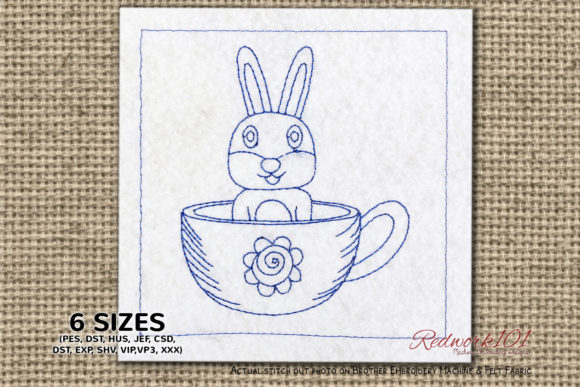
The visual personality of this design is approachable. The bunny peeking out from the cup creates an instant narrative of warmth and comfort. For embroidery designers and small business owners, this is crucial. We are not just selling stitches; we are selling a feeling. This design feels like a slow morning, a warm beverage, and the gentle arrival of spring. It fits naturally into projects where the goal is charm rather than ostentation.
Real-World Application: The Tote Bag Test
To truly evaluate any machine embroidery design, you have to imagine it on a physical product. I recently considered this design for a custom run of canvas tote bags for a local boutique’s spring launch. The redwork style, which traditionally uses a single color thread on a neutral background, is ideal for this application. Canvas has a distinct texture, and heavy fill stitches can sometimes distort the fabric or feel stiff to the touch. Because this design relies heavily on outline and minimal filling, it sits lightly on the material.
When stitching this onto a tote, the clarity of the lines remained sharp. The bunny’s ears and the rim of the coffee cup were defined clearly, even from a distance. For an Etsy seller or craft fair vendor, this visibility is key. Customers walking by a booth need to register the design quickly. The bold, simple shapes of the Easter Bunny in Coffee Cup Redwork make it instantly recognizable, which drives engagement and potential sales.
Versatility Across Product Lines
Beyond totes, this design shows remarkable versatility. I tested it mentally against several other common embroidery project types:
- Sweatshirt Embroidery: Placed on the left chest of a heather grey crewneck, the design acts as a subtle brand accent or seasonal highlight. It does not overwhelm the garment.
- Baby Embroidery: On a soft muslin swaddle or onesie, the lack of dense satin stitch means the finished product remains soft against sensitive skin. This is a major selling point for parents.
- Kitchen Textiles: Imagine this on a flour sack tea towel. The redwork tradition ties directly into kitchen decor, making it a perfect fit for holiday gifts or housewarming presents.
- Embroidered Patch: If digitized with a border, this could easily become a cute iron-on patch, adding value as a separate design asset.
For those creating personalized gift items, the space within or around the cup could potentially accommodate a small monogram, though care must be taken not to clutter the composition. The design breathes well on its own, so any addition should be minimal.
Technical Considerations and Fabric Choice
While the design is forgiving, it is not without its technical nuances. The description notes that the box stitch shown in some previews is optional and often a different color. This is a critical detail for production efficiency. If you are running a batch of fifty units for a small shop product, every thread change adds time. Skipping the optional box allows for a faster, single-color run, which is ideal for redwork aesthetics. However, if you choose to include it, ensure your thread color contrasts sufficiently with the main design to avoid a muddy appearance.
Fabric texture plays a significant role here. On smooth cotton or linen, the running stitches will lie flat and crisp. On textured fabrics like terry cloth or heavy wool, the fine details of the bunny’s face might get lost. I recommend avoiding highly textured materials unless you scale the design up significantly. Similarly, be cautious with stretchy fabrics. Without proper stabilization, the outline stitches can pucker. Always use a cut-away or tear-away stabilizer appropriate for your fabric weight to maintain the integrity of the hoop size and stitch placement.
Dark fabrics present another challenge. Redwork traditionally implies light backgrounds. If you stitch this in white thread on a navy sweatshirt, it works beautifully. But if you attempt to use a dark thread on a dark fabric, the design will vanish. Always test your thread colors against your fabric base. A quick black-and-white mockup can help you visualize contrast before you commit to stitching.
Commercial Viability and Brand Consistency
For commercial embroidery projects, consistency is king. This design offers a high level of repeatability. Because it lacks complex gradients or ultra-fine details that might vary between machine brands, it is likely to stitch out consistently across different setups. This reliability builds customer trust. When a buyer receives a handmade product that looks exactly like the photo, their confidence in your brand grows.
Furthermore, the timeless nature of the bunny and coffee motif ensures it does not feel dated after the holiday passes. While it is categorized under Easter, the coffee element gives it year-round appeal for spring mornings. This extends the shelf life of your inventory, allowing you to sell these items from March through May without them feeling strictly tied to a single Sunday.
Practical Designer Notes
Before integrating the Easter Bunny in Coffee Cup Redwork into your production line, consider these practical steps:
- Test on Scrap Fabric: Never skip this step. Check for puckering and thread breaks.
- Verify Stitch Density: Ensure the density is appropriate for your specific fabric. Too dense, and it becomes stiff; too loose, and it looks cheap.
- Check Licensing: Confirm whether the digital embroidery file allows for commercial use. Most designers allow selling finished physical items, but reselling the digital file itself is usually prohibited.
- Inspect Small Details: Zoom in on the digitizing software. Look for unnecessary jumps or trims that could slow down your machine.
- Consider Hoop Size: Ensure the design fits comfortably within your standard hoop, leaving enough margin for hooping errors.
In conclusion, this design is a solid addition to any spring collection. It balances aesthetic charm with technical practicality, making it suitable for both hobbyists and professional craft business owners. By respecting the simplicity of the redwork style and choosing the right materials, you can create a finished product that delights customers and stands up to repeated washing and wear. It is a reminder that sometimes, the simplest designs are the most effective.